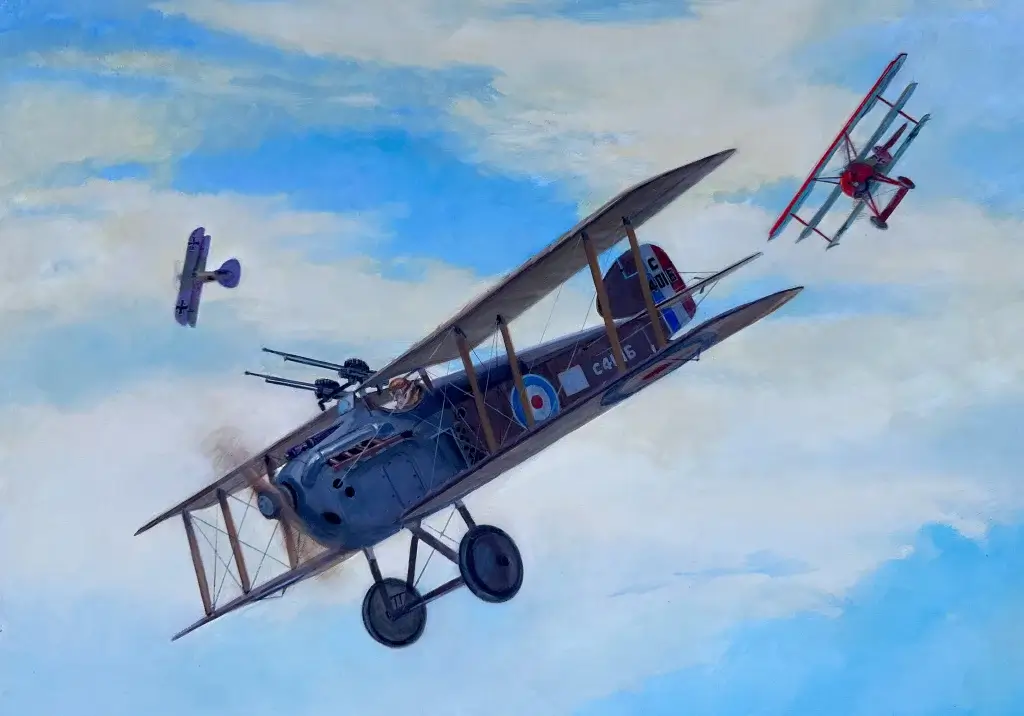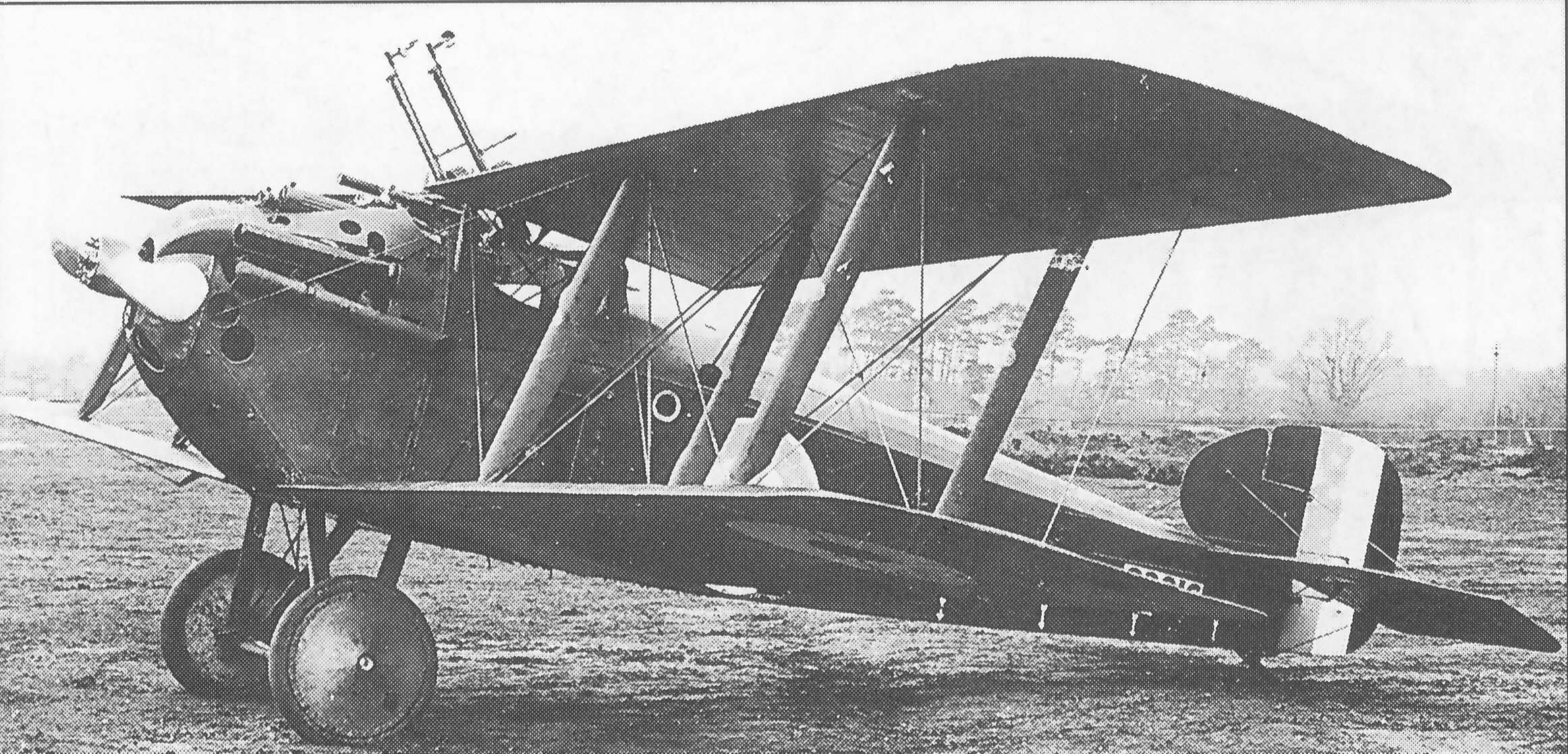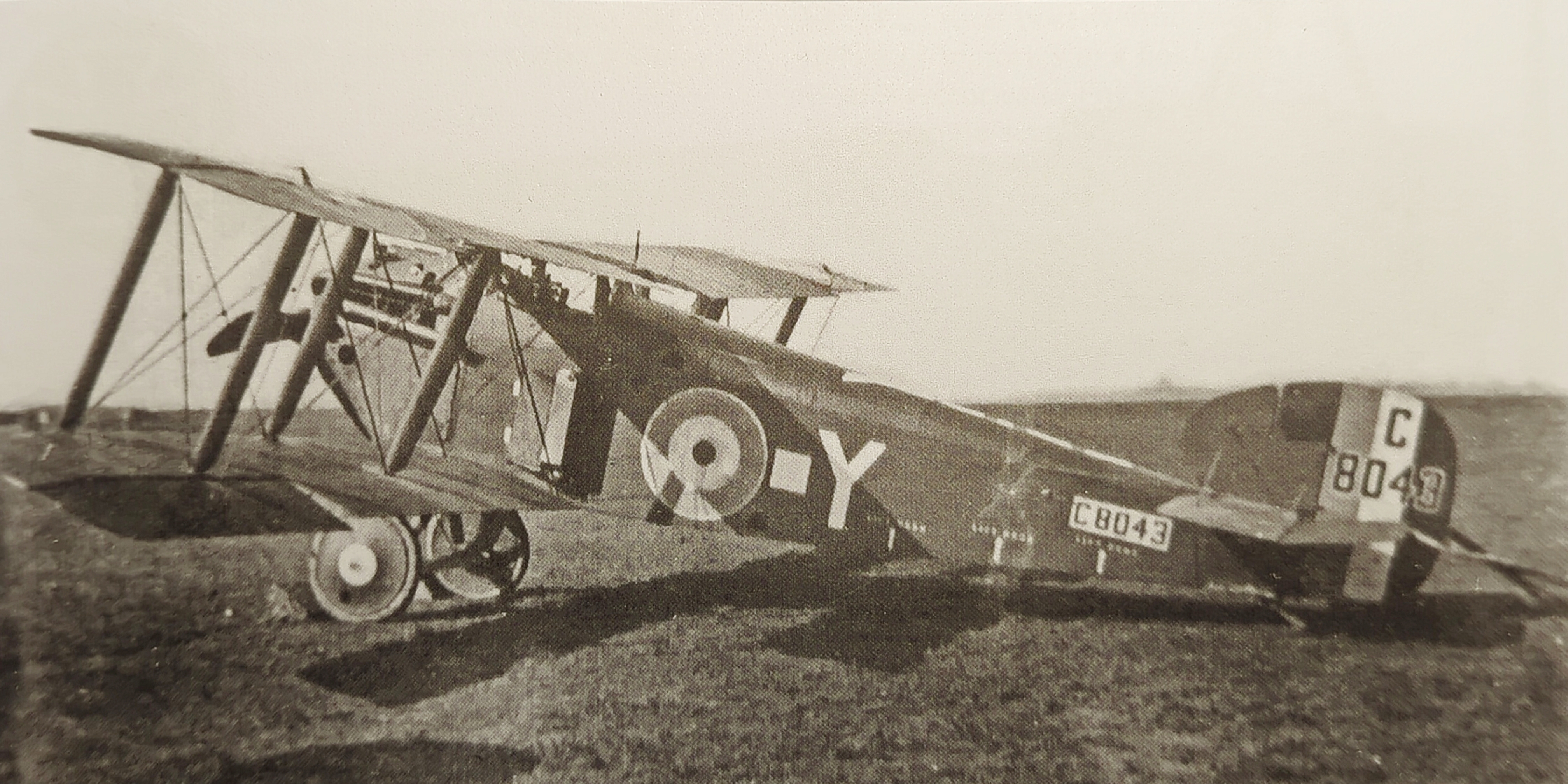
Sopwith Dolphin, by Sopwith Aviation Company
Main role: Fighter
Engine: 1 x Hispano-Suiza V-8 149 kW (200 hp)
Armament: 3 or 4 x 7.7 mm machine-guns + 4 x 11.3 kg bombs
Unlike earlier Sopwith fighters the Dolphin was powered by a static engine, and the deep fuselage virtually filled the gap between the backward-staggered wings so that the pilot sat with his head protruding through a gap in the upper-wing centre section for superb fields of vision in the upper hemisphere. The prototype flew in May 1917 with a 149 kW (200 hp) Hispano-Suiza geared engine, and the same powerplant was used in the Dolphin Mk I that began to enter service late in 1917. Problems with the geared engine then led to the Dolphin Mk III with a direct-drive version of the same engine, and the designation Dolphin Mk II was used for a few aircraft with a 224 kW (300 hp) Hispano-Suiza direct-drive engine. Production totaled 1532, but only 621 were issued to operational squadrons, which disliked the Dolphin’s unusual stalling characteristics and the vulnerability of the pilot in the nose-over landing accident. (Source: The International Encyclopedia of Aircraft, Oriole Publishing, 1991)
Span: 9.91 m (32 ft 6 in)
Length: 6.78 m (22 ft 3 in)
Height:
Wing surface:
Empty weight:
Max. weight:
Cruise speed:
Max. speed: 180 km/h (112 mph)
Ceiling:
Endurance: 1.75 hours
Climb rate: